
Your 406 Dream Team · Kalispell, Montana

Buying raw land in the Flathead is one of the best things you can do here — and it’s also where people get surprised after closing. A beautiful parcel with a mountain view can still be hard to get water to, expensive to put a septic on, or landlocked by an access problem nobody mentioned. None of that should scare you off. It just means the homework happens before you make an offer, not after. Here’s the plain-English version of what we walk every land buyer through.
Water
Can you actually get water to it?
This is the first question on rural land, and the answer isn’t automatic. Parts of the county simply don’t have enough groundwater for a reliable domestic supply no matter how deep you drill, so water quantity and quality are worth researching before you commit. A good starting point is the Montana DNRC Water Resources office in Kalispell, which tracks wells and water rights.
For a single home, most wells fall under Montana’s exempt well rule: up to 35 gallons per minute and no more than 10 acre-feet per year, which covers normal household use without a full water-right permit. Go above either limit and you’re into the permitting process.
New as of January 2026
Montana now requires a Notice of Intent filed with the DNRC before you use water from a new exempt well — even if the well is already drilled. There’s a form and a filing fee, and the state aims to respond within about ten business days. This is new under House Bill 681, and it’s the kind of step that catches buyers who assume a well is “just drill and go.” We’ll make sure it’s on your radar before you close.
Two more things people miss: a domestic well may be limited to household use only — not irrigating pasture, landscaping, or watering livestock — and if the land comes with existing water rights or a ditch running through it, those rights may be shared with neighbors who hold senior claims. Confirm exactly what the water rights allow before you count on them.
Septic & wastewater
Where the septic goes — and what it’ll cost
Outside the more developed areas, there’s usually no public sewer, so you’re putting in a septic system — and that has to be approved by Flathead County Environmental Health Services before it’s installed. The single biggest cost driver is your soil: soil type decides where the system can go, how big it needs to be, and what it costs. The NRCS or the county Extension office can help you read the soils on a parcel.
Changed in 2026
Flathead County updated its septic standards in 2026. For the first time since 2004, gravity-fed systems are allowed again alongside the pressure-dosed systems the county had required — and pressure dosing can run several thousand dollars more. Pressure dosing is still the county’s preferred method, but owners with the right site, or no access to power, can now apply for a gravity system through Environmental Health. On the right lot, that’s real money saved.
The takeaway: never assume a parcel will “perc.” A quick conversation with Environmental Health, and a soils look, tells you early whether you’re looking at a standard system or an expensive engineered one.
Zoning & what you can build
Is the lot actually buildable?
A lot of Flathead County is unzoned, which cuts both ways: fewer restrictions on you, but also fewer protections against what the neighbors — or a future developer — might do next door. Either way, call Flathead County Planning & Zoning to confirm the zoning on your parcel and anything proposed nearby.
Not every lot can be built on. Steep slopes, floodplain, wetlands, and other constraints can shrink or eliminate a building site, and fence lines are not property lines — the only way to know your real boundaries is a licensed survey. A few more that matter here:
- Creeks, streams, rivers, and wetlands carry setbacks and buffers enforced by the Flathead Conservation District — check before you plan anything near water.
- Subdivided parcels often come with covenants (CC&Rs) that limit what you can do. Get a copy and make sure you can live with them before you buy.
- Some areas are legally open range, meaning keeping livestock off your land is your responsibility, not your neighbor’s.
Access & roads
Can you legally — and physically — get there?
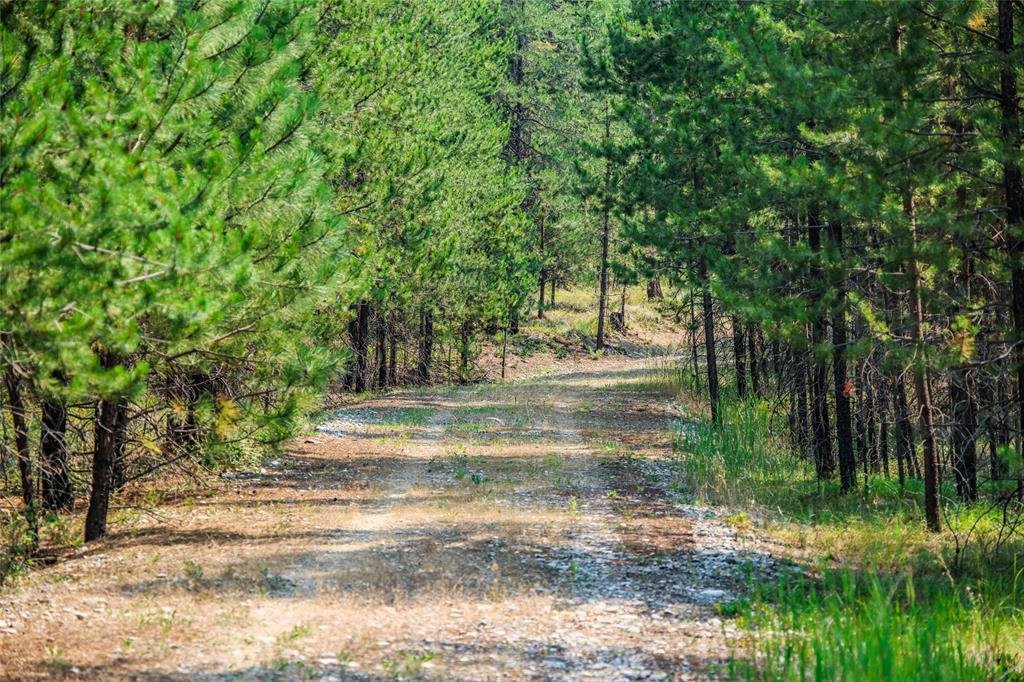
This is the one that causes the worst surprises. Legal access and physical access are not the same thing. A parcel can have a deeded easement on paper and still be impractical to reach, or have a road you can drive but no legal right to use it. Have the easement language reviewed so you know exactly what it allows.
- Private and subdivision roads are maintained by the homeowners’ or road association, not the county — budget for your share, and ask what that share has been.
- Emergency response isn’t guaranteed on hard-to-reach parcels, especially when weather makes a road impassable.
- School buses only run maintained county roads on designated routes, which matters if you have kids.
- Irrigation ditch owners may have the right to come onto your land to maintain their ditch.
Power, utilities & connectivity
How far away is the power line?
Electric service isn’t everywhere, and extending power lines can be surprisingly expensive — sometimes enough to change which parcel makes sense. Find out how close the nearest line is unless you’re planning to go off-grid. A few realities of rural utilities:
- Outages are more common out here, and an outage stops your well pump — so a plan for water and heat during a multi-day winter outage matters.
- Cell service and internet can be spotty; confirm coverage on the actual parcel, not just “the area.”
- Trash usually goes to a county “green box” site — you can’t start your own dump.
Floodplain & wildfire
Two maps worth checking first
Before you fall in love with a building spot, two quick map checks save a lot of heartache. Floodplain: some areas are mapped flood zones where building is prohibited or tightly regulated — FEMA’s flood maps and Planning & Zoning will tell you. Wildfire: the county’s mapping site rates parcels by fire hazard, and whether you’re in a rural fire district (often volunteer-run) affects both safety and insurance. Defensible-space planning around a future home is worth building into the plan from day one.
Before you make an offer
The quick checklist
- Confirm a water source is realistic — and understand the 2026 well Notice-of-Intent step.
- Check the soils and septic picture with Environmental Health before assuming it’ll perc.
- Verify zoning, building constraints, and any covenants.
- Have the access and easements reviewed — legal and physical.
- Find the nearest power, and check cell/internet on the parcel.
- Pull the floodplain and wildfire maps.
- Get a licensed survey — don’t trust fence lines or old plats.
Looking at land in the Flathead?
This is exactly the kind of homework we do with every land buyer — and we have acreage and lots listed around the valley right now, from Marion to Columbia Falls to off-grid parcels. Tell us what you’re picturing and we’ll help you find a parcel that actually works, with no surprises after closing.
This guide is general information to help you ask the right questions, not legal, engineering, or land-use advice, and rules and fees change. Always confirm specifics for your parcel with Flathead County Planning & Zoning, Environmental Health Services, the Montana DNRC, and your own licensed surveyor, attorney, or engineer before relying on them.